
Poor drainage announces itself in ways that are hard to ignore: the soggy patch of lawn that never fully dries, the muddy walkway after every rain, the basement wall that weeps whenever a storm rolls through. The good news is that many of the most effective ways to improve drainage on a property don’t require excavation equipment or a landscape contractor. Surface-level fixes, applied in the right locations, address a significant share of residential drainage problems at a fraction of the cost of subsurface solutions. The key is starting with the simplest interventions and working toward more complex ones only if simpler fixes don’t solve the problem.
The Quickest Wins to Improve Drainage Around the Home
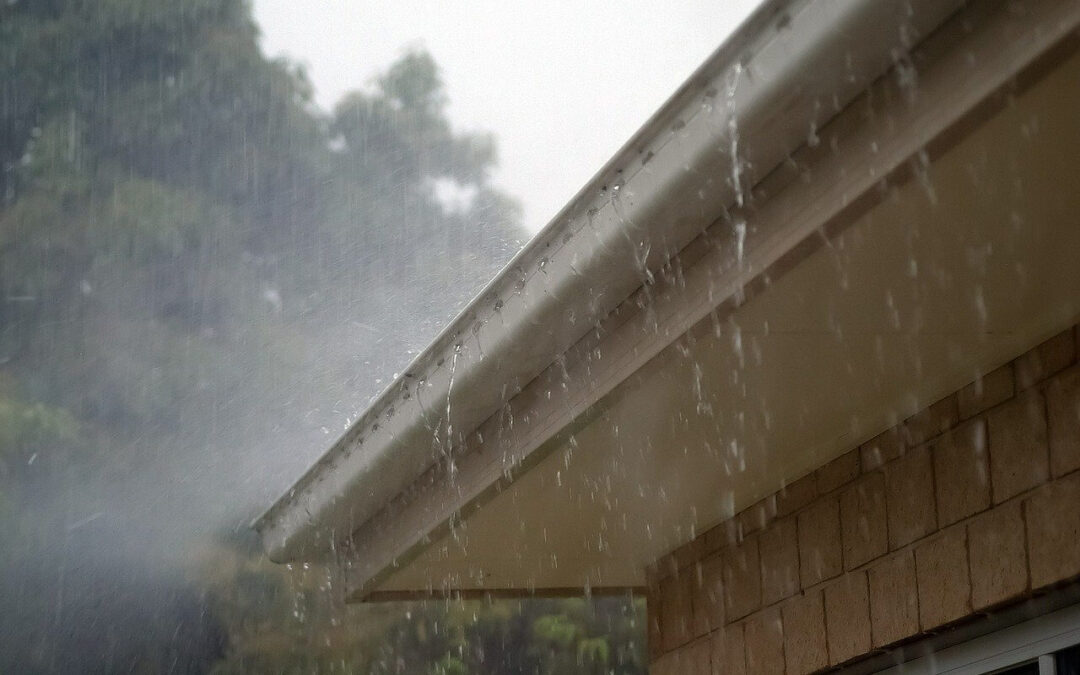
The most impactful and least expensive way to improve drainage for most homes starts not at the ground but at the roofline. A standard roof sheds an enormous volume of water during a moderate rain event, and every drop of that water is directed somewhere by the gutter and downspout system. When that system is clogged, undersized, or terminates too close to the foundation, the concentrated roof runoff becomes the primary driver of the drainage problems homeowners see at grade level. Cleaning gutters twice a year keeps water moving through the system rather than overflowing into the soil immediately adjacent to the foundation. Downspout extensions that carry discharge four to six feet away from the home are the single most cost-effective way to improve drainage at the foundation perimeter, and they take about twenty minutes to install. A downspout that discharges at the foundation wall is directing the full volume of roof runoff to the worst possible location; the fix is simple and immediate.
Surface Grading and Ground-Level Fixes
Once roof runoff is redirected, the next layer of drainage improvement addresses the grade of the soil immediately around the home. The ground adjacent to the foundation should slope away from the structure, at least six inches of drop over the first ten feet. When that slope reverses due to soil settlement, surface runoff heads toward the foundation rather than away from it. Adding soil to low areas near the foundation and shaping it away from the structure is a straightforward DIY project that will meaningfully improve drainage without any specialized equipment. A flat-edged shovel, a wheelbarrow of topsoil, and an afternoon produce results that a homeowner can verify immediately by watching where water flows during the next rain.
Landscape Solutions That Improve Drainage While Adding Value
For areas of the yard where water consistently pools, the landscape approach that improves drainage most naturally is a rain garden, a shallow depression planted with water-tolerant native plants that intercepts runoff and allows it to infiltrate gradually rather than pooling on the surface. Rain gardens are both functional and attractive, turning a problem area into a designed landscape feature rather than a persistent muddy spot. Dry creek beds serve a similar function for properties with defined drainage channels, a rock-lined swale that directs surface water away from problem areas to an appropriate discharge point. They handle high-volume flow events that a rain garden can’t absorb, and they read as an intentional design feature rather than evidence of a drainage problem.
Innovative Home Concepts offers comprehensive inspection services to homebuyers and sellers in Charlotte and surrounding areas. Contact us to request an appointment.