
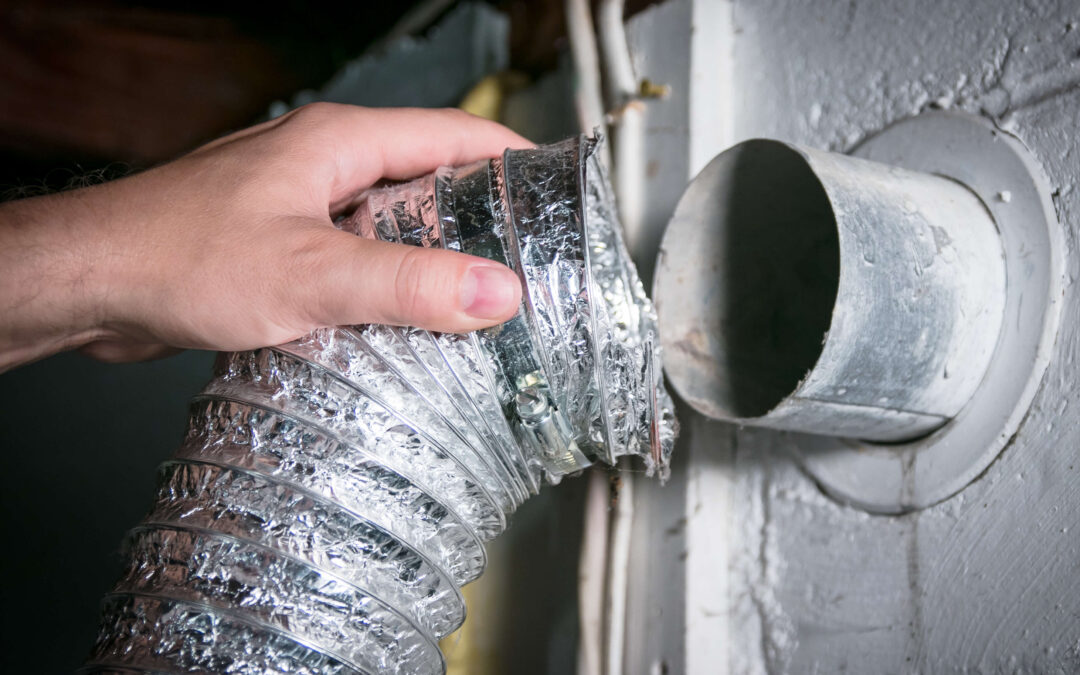
If your dryer needs two cycles to dry a single load, the problem usually isn’t the machine. Lint builds up inside the vent line over time, restricting airflow and trapping heat, and it’s one of the most preventable causes of house fires. The good news is that you can clean your dryer vent yourself in under an hour with a few inexpensive tools. Here’s how to do it, how often it’s needed, and what to watch for between cleanings.
How to Clean Your Dryer Vent Step by Step
Wear a dust mask, since lint is fine and easy to inhale. Start by unplugging the dryer, and shut off the gas valve first if it’s a gas model. Pull the dryer away from the wall, loosen the clamp, and disconnect the duct from the back of the machine. Vacuum the lint from the duct and from the dryer’s exhaust opening, then run a flexible dryer vent brush through the duct from both ends. Many kits attach to a standard drill and extend with connecting rods. Next, go outside, remove the vent cover, and clear any lint or debris from the hood. Reconnect everything snugly, push the dryer back without crushing the duct, and run a short cycle to confirm air is flowing freely from the outside vent.
Signs It Is Time to Clean Your Dryer Vent
Waiting for a problem is the most common mistake. Clothes that stay damp after a full cycle, a dryer that feels unusually hot, a burning smell, or lint collecting around the lint trap housing all point to restricted airflow. If the exterior flap barely opens while the dryer runs, the line is likely clogged. A quick test is to hold your hand over the exterior vent while the dryer runs; you should feel a strong, steady stream of warm air. Once a year is a reasonable baseline, but households with pets, heavy laundry loads, or a long duct run may need to clean your dryer vent every six months.
Choose the Right Duct and Keep the Run Short
The duct itself matters as much as the cleaning. Rigid or semi-rigid metal duct moves air far better than thin foil or plastic accordion-style hose, which sags, tears, and traps lint in its ridges. Keep the run as short and straight as possible, since every bend adds resistance. The exterior hood should have a flap that opens freely and no screen, because screens clog quickly with lint. If you find a crushed or kinked section while you’re cleaning, replace it before reassembling.
Everyday Habits That Keep Lint Under Control
Remove lint from the trap after every load, and wash the screen with warm soapy water a few times a year, since fabric softener sheets leave a film that blocks airflow even when the screen looks clean. Avoid overloading the dryer, which forces the machine to run longer and pushes more lint into the vent. Keep the area around the dryer clear of clutter, vacuum around and behind the machine every few months, and never run it while you’re away from home. These small habits make it easier to clean your dryer vent less often and keep the machine drying efficiently.
Innovative Home Concepts offers comprehensive inspection services to homebuyers and sellers in Charlotte and surrounding areas. Contact us to request an appointment.